
What You Need to Know About Bifocal Lenses
Bifocal lenses correct vision at two distances in a single pair of glasses — a trusted solution for people whose eyes struggle at more than one range.
What Are Bifocal Lenses?
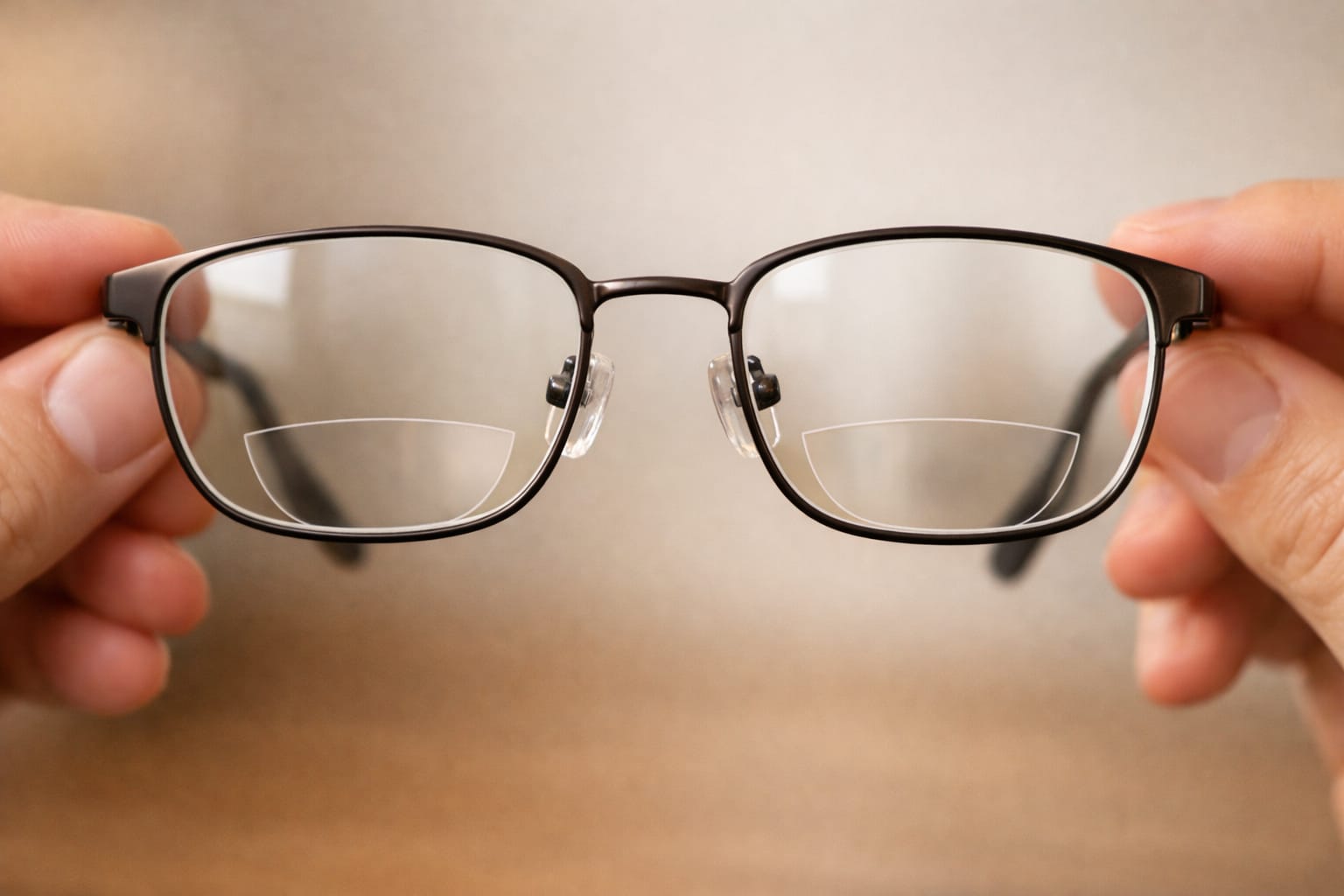
A bifocal lens has two distinct viewing areas separated by a visible line. The upper part of the lens helps you see objects farther away. The lower part helps you focus on things up close, like text on a page. When you shift the angle of your head slightly, you switch between the two zones. This makes bifocals a practical choice for people who have trouble seeing at both near and far distances. Bifocal glasses have been around for a long time — in fact, they date back to the era of Benjamin Franklin.
Who Needs Bifocal Lenses?
Bifocals are often prescribed for people who are farsighted (hyperopia — meaning they see distant objects more clearly than close ones) but also have trouble reading. As we age, the eye's natural lens loses flexibility, making it harder to shift focus between near and far. This common condition is called presbyopia. A typical bifocal prescription places distance correction in the upper lens zone and reading correction in the lower zone, so both vision needs are met with one pair of glasses.
The Visible Line: What to Expect
One well-known feature of bifocal lenses is the visible line that divides the two viewing areas. Most wearers adjust to it quickly and stop noticing it in daily use. However, some people find it distracting, especially in bright light or when moving their gaze between zones. If the line bothers you, it is worth knowing there are alternatives that remove it entirely.
Bifocals vs. Progressive Lenses
Progressive lenses are a newer option that blend two, three, or more fields of vision into one lens with no visible lines. They offer a more natural shift between distances — near, middle, and far — without the hard boundary found in bifocal lenses. Trifocal lenses, which have three distinct zones and two visible lines, are a middle-ground option between standard bifocals and progressives. Bifocal, trifocal, and progressive lenses are all called multifocal lenses because they address more than one vision problem in a single lens.
Choosing the Right Lens for Your Vision
The best lens type depends on your prescription, your daily activities, and your personal comfort. Some people prefer the clear zone separation of bifocals. Others adapt more easily to the gradual transition of progressive lenses. Dr. Lee Ford, O.D. at Golden Triangle Eye Center can review your prescription and daily vision demands to help you choose the lens that fits your life. Call us at 662‑327‑7271 or reach out through our contact page to set up an appointment.
