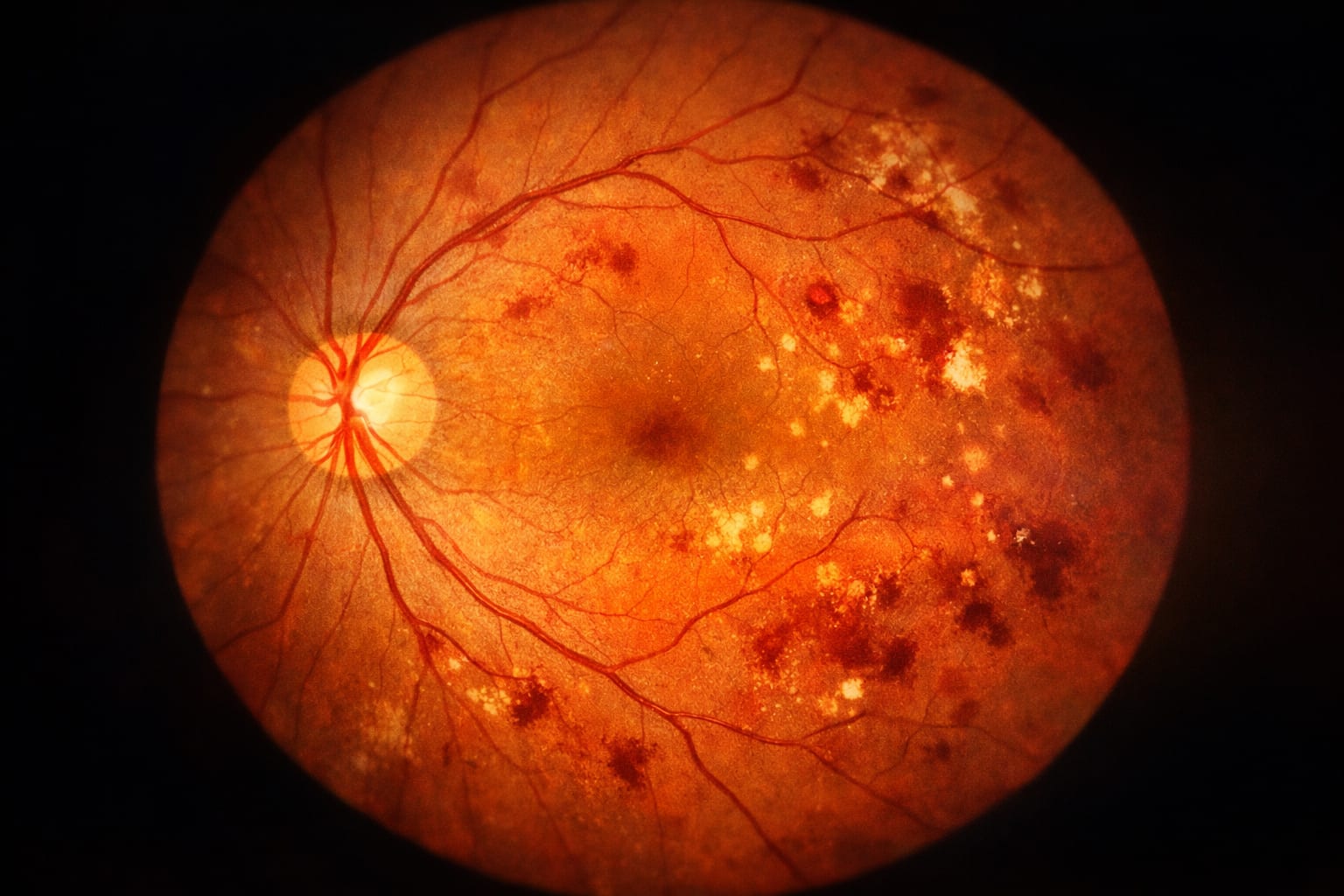
What Is Diabetic Retinopathy?

Diabetic retinopathy is a complication of diabetes caused by high blood sugar damaging the tiny blood vessels in the retina. It is the leading cause of new blindness in working-age adults.

What Is Diabetic Retinopathy?

Diabetic retinopathy is a complication of diabetes caused by high blood sugar damaging the tiny blood vessels in the retina. It is the leading cause of new blindness in working-age adults. In early stages there are no symptoms, making annual dilated eye exams essential for all diabetic patients.

When to seek care

All people with Type 1 diabetes should have a dilated exam within 5 years of diagnosis. Those with Type 2 should be examined at diagnosis. Annual exams are recommended for all diabetic patients. More frequent exams are needed if retinopathy is detected.


Symptoms of Diabetic Retinopathy

  • Early stages: no symptoms. As it progresses: spots or floaters in vision
  • blurred vision
  • fluctuating vision
  • dark or empty areas in vision
  • difficulty with color perception
  • sudden vision loss (in severe or proliferative stages involving vitreous hemorrhage or retinal detachment).

Causes & Risk Factors

Chronically elevated blood glucose damages retinal blood vessels, causing them to leak fluid, swell, or close off. New, fragile blood vessels may grow on the retina (proliferative retinopathy) and bleed. Risk factors: duration of diabetes, poor blood sugar control, high blood pressure, high cholesterol, pregnancy, and tobacco use.

Treatment Options

Treatment Options

  1. Overview

    Managing blood sugar, blood pressure, and cholesterol is the foundation of treatment. Eye-specific treatments include: anti-VEGF injections to reduce swelling and stop abnormal vessel growth; laser photocoagulation to seal leaking vessels; vitrectomy surgery to remove blood from the vitreous in advanced cases.

Insurance & Cost for Diabetic Retinopathy

Annual diabetic eye exams are a standard of care covered by most medical insurance plans for patients with diabetes — Medicare covers one dilated exam per year. Treatment for diabetic retinopathy, including laser therapy and anti-VEGF injections, is billed to medical insurance when medically necessary. Typically covered: • Annual dilated diabetic eye exam under medical insurance • Retinal imaging and OCT for diabetic monitoring • Anti-VEGF injections and laser treatment for diabetic retinopathy Often out-of-pocket: • Copays for medical office visits • Deductibles before medical benefits apply • Cosmetic or non-medically indicated services

Coverage varies by plan — we verify your benefits before treatment

Call before your visit and we will check your vision and medical benefits so there are no surprises.

Frequently Asked Questions About Diabetic Retinopathy

Can diabetic retinopathy be reversed?

Early-stage diabetic retinopathy can sometimes stabilize or improve with tight blood sugar control. Advanced retinopathy cannot be fully reversed, but treatments can prevent further loss and sometimes restore some vision.

I have diabetes but my vision is fine — do I still need an eye exam?

Absolutely. Diabetic retinopathy has no symptoms in early stages. By the time vision changes are noticed, significant damage may already have occurred. Annual dilated exams are essential even when vision feels normal.

Can I go blind from diabetic retinopathy?

Yes, without treatment. However, with early detection and consistent management of both blood sugar and the eye condition, most people with diabetes can preserve their vision long-term.

Is a diabetic eye exam covered by insurance?

Yes. Annual diabetic eye exams are covered by Medicare and most medical insurance plans for patients with diabetes. If diabetic retinopathy is found, treatment is typically covered under medical benefits. Bring your medical insurance card to every visit.

Medical Disclaimer

The information on this page is for general educational purposes only and is not a substitute for professional medical advice, diagnosis, or treatment. Always seek the advice of your eye care provider with any questions about a medical condition. If you think you may have a medical emergency, call 911.

Book an Evaluation for Diabetic Retinopathy

All people with Type 1 diabetes should have a dilated exam within 5 years of diagnosis. Those with Type 2 should be examined at diagnosis. Annual exams are recommended for all diabetic patients. More frequent exams are needed if retinopathy is detected.

Our Locations

Golden Triangle Eye Center serves patients at multiple locations.

Columbus

Office hours

Monday8:00 AM - 5:00 PM
Tuesday8:00 AM - 5:00 PM
Wednesday8:00 AM - 5:00 PM
Thursday8:00 AM - 5:00 PM
Friday8:00 AM - 12:00 PM
SaturdayClosed
SundayClosed

Aliceville

Office hours

MondayClosed
TuesdayClosed
WednesdayClosed
ThursdayClosed
Friday8:30 AM - 4:30 PM
SaturdayClosed
SundayClosed
Patient Reviews

What Our Patients Say

We take pride in delivering exceptional eye care and building lasting relationships with our patients.

★★★★★4.9(664+ Reviews)
Write a Review (opens in new tab)

Opens Google — no account required to read. Google account needed to post a review.

Have a question? We’d love to hear from you.

Send Us a Message