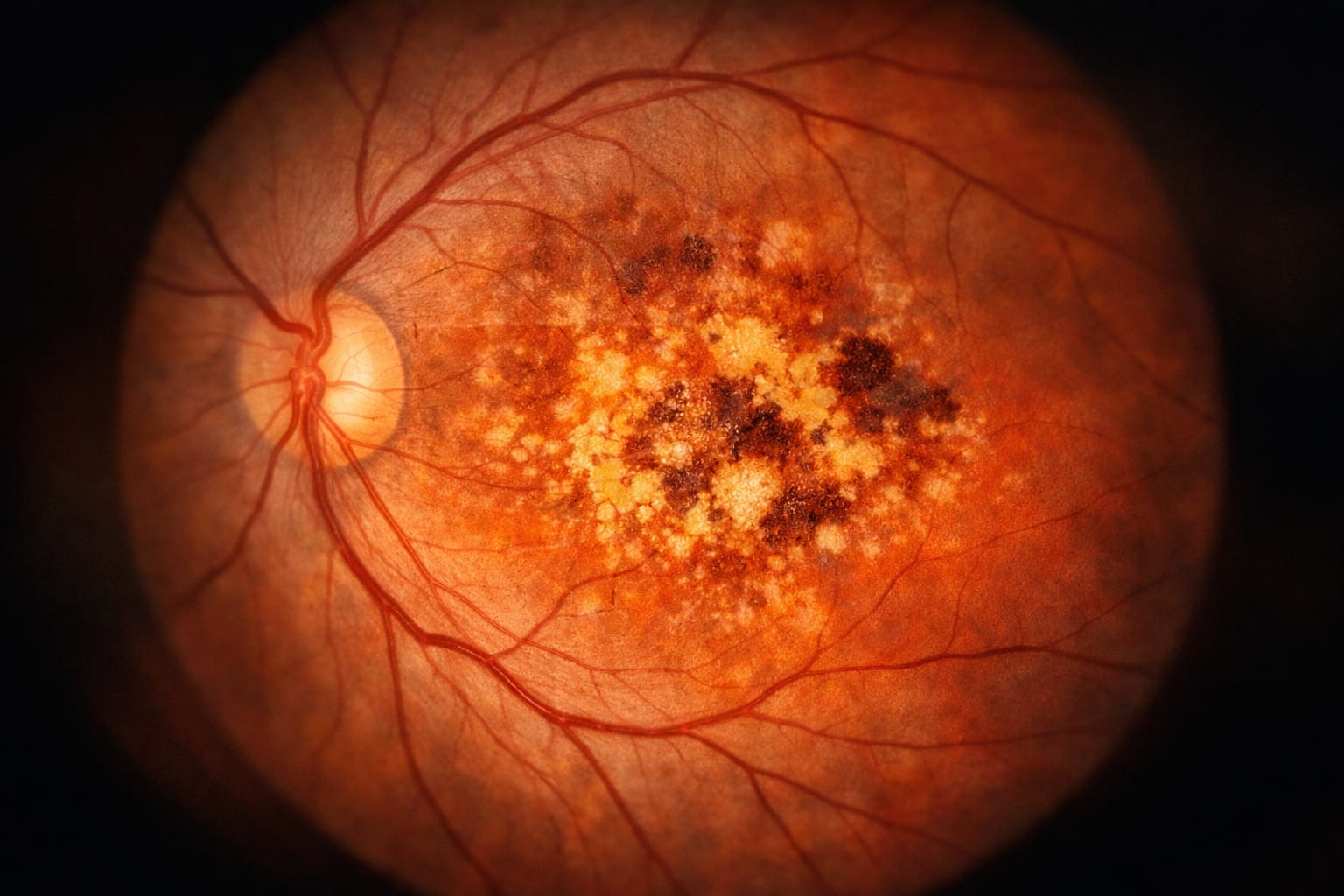
What Is Macular Degeneration?

Age-related macular degeneration (AMD) is the leading cause of vision loss in adults over 50. It damages the macula — the central part of the retina responsible for sharp, detailed vision used for reading, driving, and recognizing faces.

What Is Macular Degeneration?

Age-related macular degeneration (AMD) is the leading cause of vision loss in adults over 50. It damages the macula — the central part of the retina responsible for sharp, detailed vision used for reading, driving, and recognizing faces. AMD does not cause total blindness, but the loss of central vision can be profound.

When to seek care

See your eye doctor promptly if you notice distortion in straight lines, a new blind spot, or sudden changes in central vision. Early treatment of wet AMD is critical — delays of even weeks can allow irreversible damage.


Symptoms of Macular Degeneration

Blurry or fuzzy central vision
straight lines appearing wavy or distorted (metamorphopsia)
a blind spot or dark area in the center of vision
difficulty reading fine print or seeing faces clearly
colors appearing less bright. Side (peripheral) vision is typically preserved.

Causes & Risk Factors

AMD results from the aging and breakdown of retinal cells in the macula. Dry AMD (90% of cases) involves slow accumulation of drusen deposits. Wet AMD is caused by abnormal blood vessel growth that leaks fluid. Risk factors: age, smoking, family history, high blood pressure, obesity, and prolonged UV exposure.

Treatment Options

  1. Overview

    Dry AMD: no cure, but AREDS2 vitamins (antioxidant supplements) can slow progression in intermediate cases. Wet AMD: anti-VEGF injections (ranibizumab, aflibercept, bevacizumab) are highly effective when started early. Low vision aids and rehabilitation help maximize remaining vision. Regular monitoring with an Amsler grid at home is recommended.

Insurance & Cost for Macular Degeneration

Medicare Part B and most medical insurance plans cover diagnostic testing for macular degeneration, including OCT imaging and fluorescein angiography. Anti-VEGF injections for wet AMD are covered by medical insurance when medically necessary, though copays and prior authorization may apply. AREDS2 vitamin supplements are generally not covered. Typically covered: • Dilated retinal exams and OCT imaging for AMD monitoring • Anti-VEGF injections for wet AMD under medical insurance • Referral and co-management with retinal specialists Often out-of-pocket: • AREDS2 vitamin supplements (over-the-counter) • Medical plan copays for injection visits • Low vision aids and assistive devices

Coverage varies by plan — we verify your benefits before treatment

Call before your visit and we will check your vision and medical benefits so there are no surprises.

Questions, answered

Frequently Asked Questions About Macular Degeneration

Will I go completely blind from AMD?

AMD rarely causes total blindness because peripheral vision is usually preserved. However, it can severely impair the central vision needed for daily tasks. Treatment can significantly slow or halt progression.

Can diet help macular degeneration?

A diet rich in leafy greens (lutein and zeaxanthin), omega-3 fatty acids, and antioxidants supports retinal health. AREDS2 supplements are clinically proven to reduce progression risk in intermediate and advanced AMD.

How often do I need injections for wet AMD?

Injection frequency varies. Initially, most patients receive monthly injections. If the condition stabilizes, injections may be spaced out to every 2‑3 months. Your retinal specialist will guide your schedule based on response to treatment.

Is macular degeneration treatment covered by insurance?

Medical insurance, including Medicare Part B, typically covers diagnostic testing and anti-VEGF injections for wet macular degeneration when medically necessary. Copays and prior authorization vary by plan. We help coordinate coverage with your retinal specialist.

Medical Disclaimer

The information on this page is for general educational purposes only and is not a substitute for professional medical advice, diagnosis, or treatment. Always seek the advice of your eye care provider with any questions about a medical condition. If you think you may have a medical emergency, call 911.

Book an Evaluation for Macular Degeneration

See your eye doctor promptly if you notice distortion in straight lines, a new blind spot, or sudden changes in central vision. Early treatment of wet AMD is critical — delays of even weeks can allow irreversible damage.

Our Locations

Golden Triangle Eye Center serves patients at multiple locations.

Columbus

Office hours

Monday8:00 AM - 5:00 PM
Tuesday8:00 AM - 5:00 PM
Wednesday8:00 AM - 5:00 PM
Thursday8:00 AM - 5:00 PM
Friday8:00 AM - 12:00 PM
SaturdayClosed
SundayClosed

Aliceville

Office hours

MondayClosed
TuesdayClosed
WednesdayClosed
ThursdayClosed
Friday8:30 AM - 4:30 PM
SaturdayClosed
SundayClosed
Patient Reviews

What Our Patients Say

We take pride in delivering exceptional eye care and building lasting relationships with our patients.

★★★★★4.9(664+ Reviews)
Write a Review (opens in new tab)

Opens Google — no account required to read. Google account needed to post a review.

Have a question? We’d love to hear from you.

Send Us a Message