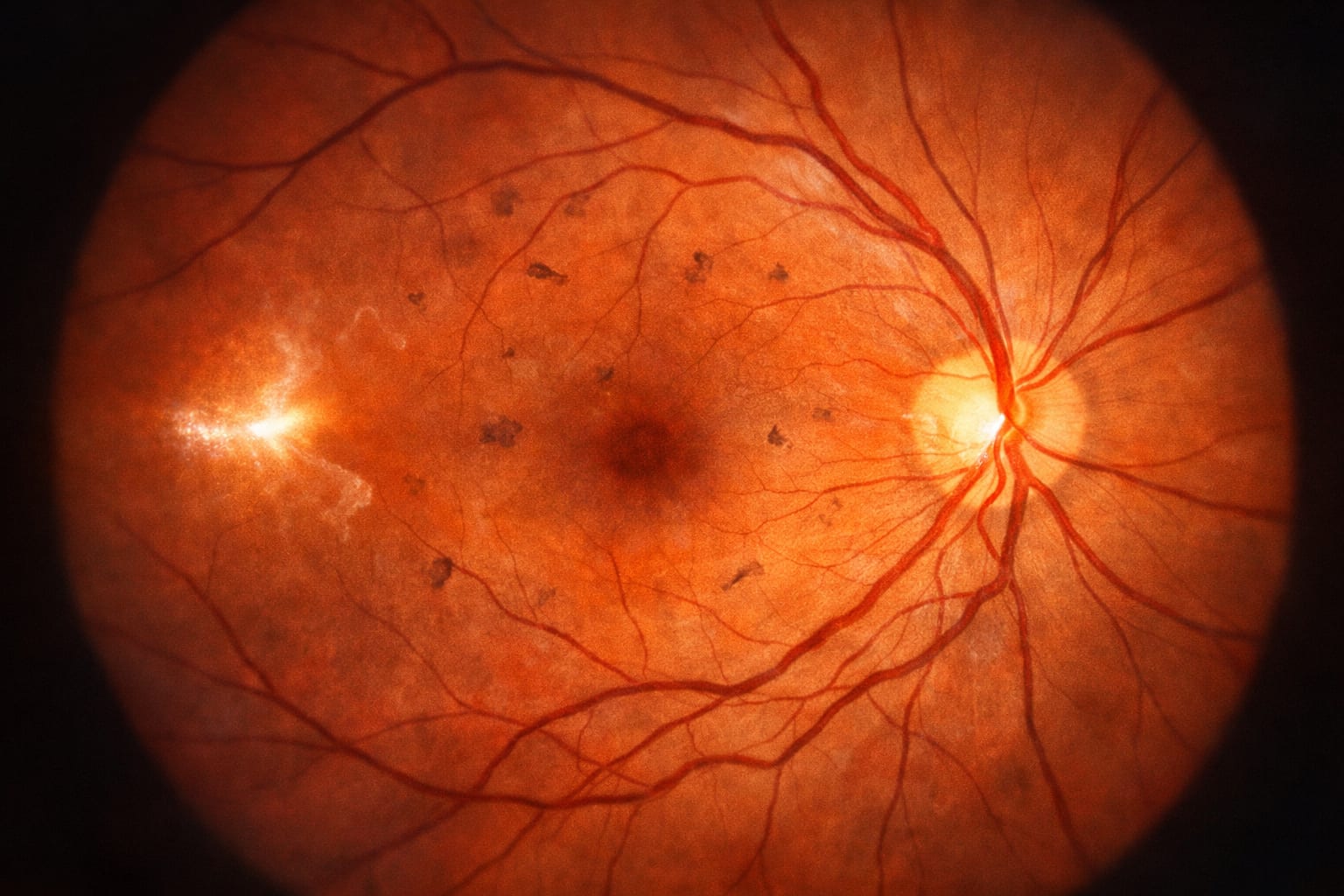
What Is Floaters & Flashes?

Floaters are tiny clumps of gel or cells inside the vitreous — the clear, jelly-like substance filling the back of the eye. They cast shadows on the retina that appear as spots, threads, cobwebs, or squiggly lines drifting through your field of vision.

What Is Floaters & Flashes?

Floaters are tiny clumps of gel or cells inside the vitreous — the clear, jelly-like substance filling the back of the eye. They cast shadows on the retina that appear as spots, threads, cobwebs, or squiggly lines drifting through your field of vision. Flashes are brief streaks of light caused by the vitreous tugging on the retina. Both are very common and usually benign, but can occasionally signal a serious problem.

When to seek care

A sudden increase in floaters, new flashes of light, or any loss of peripheral vision — even if it seems minor — requires an urgent dilated eye exam the same day. These can be early signs of a retinal tear or detachment, which is a medical emergency. Existing stable floaters that do not change do not require emergency evaluation.


Symptoms of Floaters & Flashes

  • Dark spots, strings, or cobweb-like shapes that drift when you move your eyes

  • shapes most visible against a plain light background

  • brief flashes of light in peripheral vision

  • a sudden large increase in floaters

  • a curtain or shadow over part of vision (this is an emergency).

Causes & Risk Factors

Most floaters result from age-related changes in the vitreous gel, which shrinks and becomes more liquid. When the vitreous pulls away from the retina — a posterior vitreous detachment (PVD) — it often causes a sudden increase in floaters and flashes. Less commonly, floaters are caused by retinal tears, inflammation, bleeding into the vitreous, or diabetic retinopathy.

Treatment Options

  1. Overview

    Most floaters require no treatment and fade or become less noticeable over time as the brain adapts. For severely disabling floaters: vitrectomy (surgical removal of the vitreous) or laser vitreolysis (disrupting the floaters with a laser) — both have risks and are reserved for significant cases. The priority is ruling out retinal tears or detachment, which require prompt treatment.

Insurance & Cost for Floaters & Flashes

A sudden increase in floaters or flashes warrants a covered medical eye evaluation — most medical and vision plans cover urgent assessments for new floaters to rule out retinal tears or detachment. Elective vitreolysis or vitrectomy for chronic floaters is rarely covered and is typically out-of-pocket. Typically covered: • Urgent dilated exam for new or sudden-onset floaters • Diagnostic testing to rule out retinal tear or detachment • Medical evaluation when billed as a problem visit Often out-of-pocket: • Elective laser vitreolysis for bothersome but benign floaters • Vitrectomy for non-emergency floater removal • Copays for urgent visit depending on plan type

Coverage varies by plan — we verify your benefits before treatment

Call before your visit and we will check your vision and medical benefits so there are no surprises.

Frequently Asked Questions About Floaters & Flashes

Will my floaters go away?

Most floaters do not disappear entirely, but they typically settle out of your line of sight over time and become much less noticeable. The brain also learns to ignore them.

Are floaters more common as you age?

Yes. The vitreous gel naturally liquefies and shrinks with age. People over 50, those with myopia, and those who have had eye surgery or trauma are more likely to experience floaters.

When are floaters an emergency?

Seek same-day eye care for: a sudden shower of new floaters, floaters accompanied by flashes of light, or any shadow or curtain obscuring part of your vision. These symptoms can indicate a retinal tear or detachment.

Is floater evaluation covered by insurance?

Yes. Evaluation for new floaters or flashes is covered by most vision and medical plans because ruling out retinal detachment is medically necessary. Elective treatment for chronic floaters is typically not covered. Call us immediately for sudden changes.

Medical Disclaimer

The information on this page is for general educational purposes only and is not a substitute for professional medical advice, diagnosis, or treatment. Always seek the advice of your eye care provider with any questions about a medical condition. If you think you may have a medical emergency, call 911.

Book an Evaluation for Floaters & Flashes

A sudden increase in floaters, new flashes of light, or any loss of peripheral vision — even if it seems minor — requires an urgent dilated eye exam the same day. These can be early signs of a retinal tear or detachment, which is a medical emergency. Existing stable floaters that do not change do not require emergency evaluation.
Our Locations

Golden Triangle Eye Center serves patients at multiple locations.

Columbus

Office hours

Monday8:00 AM - 5:00 PM
Tuesday8:00 AM - 5:00 PM
Wednesday8:00 AM - 5:00 PM
Thursday8:00 AM - 5:00 PM
Friday8:00 AM - 12:00 PM
SaturdayClosed
SundayClosed

Aliceville

Office hours

MondayClosed
TuesdayClosed
WednesdayClosed
ThursdayClosed
Friday8:30 AM - 4:30 PM
SaturdayClosed
SundayClosed
Patient Reviews

What Our Patients Say

We take pride in delivering exceptional eye care and building lasting relationships with our patients.

★★★★★4.9(664+ Reviews)
Write a Review (opens in new tab)

Opens Google — no account required to read. Google account needed to post a review.

Have a question? We’d love to hear from you.

Send Us a Message