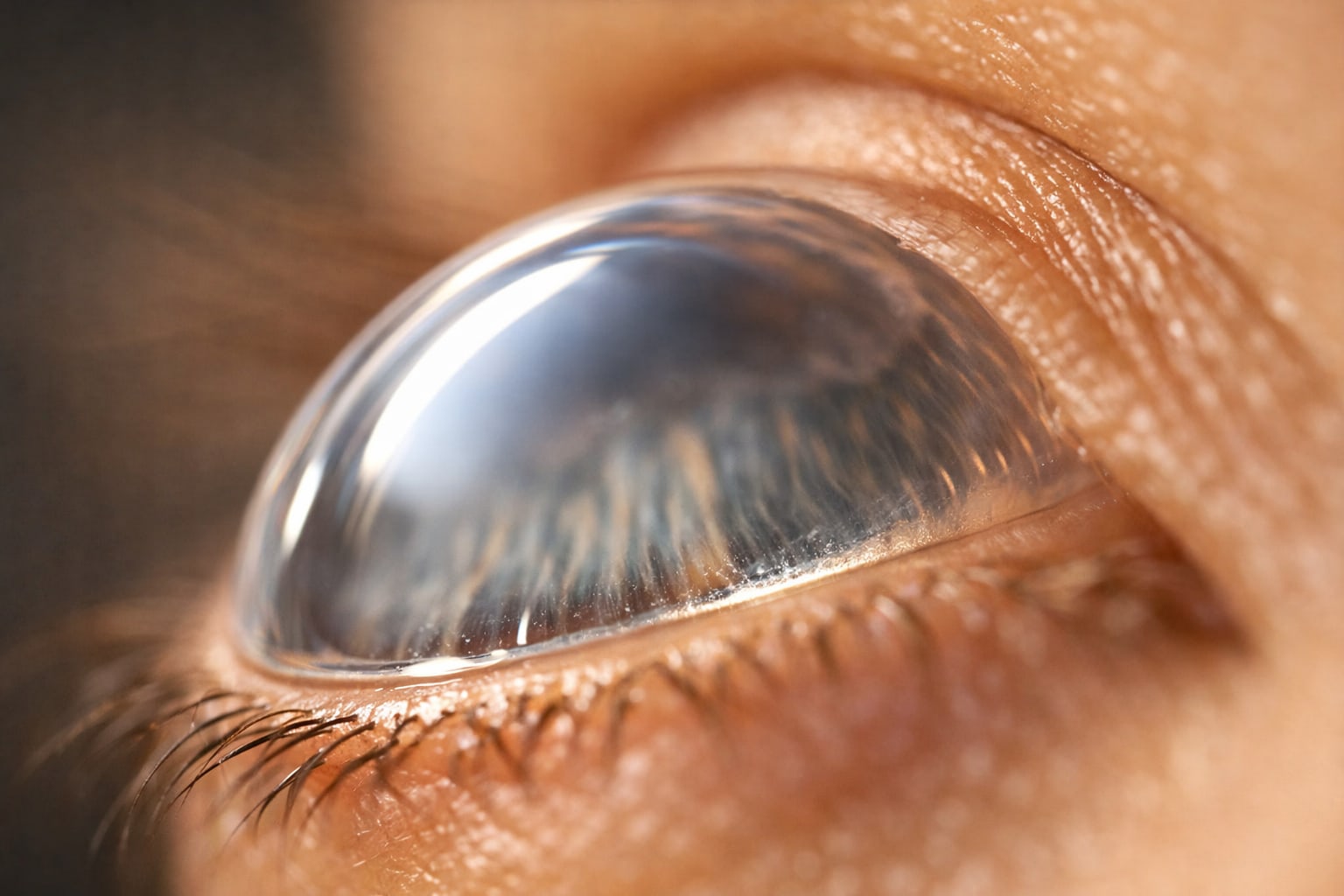
What Is Hyperopia (Farsightedness)?

Hyperopia, or farsightedness, is a refractive error in which the eye is shorter than normal or the cornea is too flat, causing light to focus behind the retina rather than on it. Mildly farsighted people can use the eye's focusing muscles to compensate, especially when young — which is why many farsighted children appear to see normally.

What Is Hyperopia (Farsightedness)?

Hyperopia, or farsightedness, is a refractive error in which the eye is shorter than normal or the cornea is too flat, causing light to focus behind the retina rather than on it. Mildly farsighted people can use the eye's focusing muscles to compensate, especially when young — which is why many farsighted children appear to see normally. However, this constant focusing effort causes eyestrain and fatigue.

When to seek care

Children who squint, turn one eye in, have frequent headaches, or complain of eyestrain after reading should have a comprehensive eye exam as soon as possible. Adults who notice increasing difficulty with near tasks, especially in their 20s and 30s before presbyopia typically occurs, should be evaluated for undetected hyperopia.


Symptoms of Hyperopia (Farsightedness)

  • Difficulty focusing on near objects, especially when tired

  • headaches or eye strain after reading or computer work

  • needing to hold reading materials farther away

  • blurry vision up close (in significant hyperopia)

  • eye fatigue and discomfort

  • in children, farsightedness is a common cause of crossed eyes (accommodative esotropia) and amblyopia.

Causes & Risk Factors

Hyperopia occurs when the eyeball is too short from front to back or when the corneal curve is insufficient to bend light rays so they focus directly on the retina. It is often hereditary. Babies are born mildly farsighted, and most outgrow it as the eye grows during childhood.

Treatment Options

Treatment Options

  1. Overview

    Prescription eyeglasses with convex (plus power) lenses; contact lenses; LASIK or PRK for eligible adults. In children, correcting the underlying farsightedness with glasses is often the first step in treating associated accommodative esotropia or amblyopia.

Insurance & Cost for Hyperopia (Farsightedness)

Hyperopia correction with glasses or contact lenses is covered by most vision insurance plans. Children's hyperopia treatment — especially when associated with eye turns or amblyopia — may bill to medical insurance when medically necessary. Refractive surgery is elective and not covered. Typically covered: • Comprehensive eye exam and hyperopia refraction • Eyeglasses or contact lenses through vision plan allowance • Pediatric hyperopia treatment when linked to strabismus or amblyopia Often out-of-pocket: • LASIK or PRK for hyperopia (elective) • Premium lens upgrades beyond plan allowance • Contact lens fitting fee

Coverage varies by plan — we verify your benefits before treatment

Call before your visit and we will check your vision and medical benefits so there are no surprises.

Frequently Asked Questions About Hyperopia (Farsightedness)

Is being farsighted the same as having reading problems?

Not exactly. Farsightedness (hyperopia) is a structural refractive error, while presbyopia is age-related loss of focusing ability. Both can make near vision difficult, but they are different conditions with different mechanisms.

Do children outgrow farsightedness?

Many children outgrow mild to moderate hyperopia as their eyes grow longer through childhood. However, significant farsightedness that is causing eye turns or amblyopia should be corrected with glasses, regardless of whether it may eventually improve.

Can LASIK fix farsightedness?

Yes, for eligible patients. LASIK is FDA-approved to treat hyperopia within certain prescription ranges. Your corneal thickness, prescription, and pupil size all factor into whether LASIK is appropriate for your eyes.

Is farsightedness treatment covered by insurance?

Vision insurance typically covers glasses or contacts for hyperopia. In children, significant farsightedness linked to crossed eyes or lazy eye may be covered under medical benefits. We verify how your visit bills before your appointment.

Medical Disclaimer

The information on this page is for general educational purposes only and is not a substitute for professional medical advice, diagnosis, or treatment. Always seek the advice of your eye care provider with any questions about a medical condition. If you think you may have a medical emergency, call 911.

Book an Evaluation for Hyperopia (Farsightedness)

Children who squint, turn one eye in, have frequent headaches, or complain of eyestrain after reading should have a comprehensive eye exam as soon as possible. Adults who notice increasing difficulty with near tasks, especially in their 20s and 30s before presbyopia typically occurs, should be evaluated for undetected hyperopia.

Our Locations

Golden Triangle Eye Center serves patients at multiple locations.

Columbus

Office hours

Monday8:00 AM - 5:00 PM
Tuesday8:00 AM - 5:00 PM
Wednesday8:00 AM - 5:00 PM
Thursday8:00 AM - 5:00 PM
Friday8:00 AM - 12:00 PM
SaturdayClosed
SundayClosed

Aliceville

Office hours

MondayClosed
TuesdayClosed
WednesdayClosed
ThursdayClosed
Friday8:30 AM - 4:30 PM
SaturdayClosed
SundayClosed
Patient Reviews

What Our Patients Say

We take pride in delivering exceptional eye care and building lasting relationships with our patients.

★★★★★4.9(664+ Reviews)
Write a Review (opens in new tab)

Opens Google — no account required to read. Google account needed to post a review.

Have a question? We’d love to hear from you.

Send Us a Message