Children's Eye Health

Do Kids Really Need Sunglasses?

Yes — children's eyes are more vulnerable to UV (ultraviolet) damage than adults'. Studies show that by age 18, a child's eyes will have absorbed roughly half of their lifetime dose of UV radiation. Starting sun protection early is one of the best things you can do for your child's long-term eye health.

Protecting Your Child's Eyes from the Sun

Children spend more time outdoors than most adults — and their eyes pay the price without proper protection. Here is what every parent should know about UV risk and choosing the right sunglasses.

Why UV Exposure Is Especially Risky for Children

Many parents overlook sunglasses for kids, but the science is clear. Because children spend so much time outdoors, by age 18 their eyes will have absorbed about half of their lifetime dose of ultraviolet radiation (UV). UV rays are invisible, high-energy light rays that can harm the eyes over time. Starting sun protection in childhood — rather than waiting until adulthood — makes a real difference in long-term eye health.

Short-Term Risks: Photokeratitis and Pterygium

Too much sun without eye protection can cause real harm in a matter of hours. Photokeratitis — sometimes called "snow blindness" — is essentially a sunburn of the eye. It can cause pain, redness, and temporary vision loss that lasts up to 48 hours. Pterygium (also known as "surfer's eye") is another short-term risk. It is an itchy, swollen growth that forms on the surface of the eye and often requires surgery to remove. Both conditions can affect children who spend long hours outdoors without sunglasses.

Long-Term Risks: Cataracts, Macular Degeneration, and Eye Cancer

UV damage builds up quietly over a lifetime. Long-term overexposure to UV radiation is a known risk factor for several serious eye diseases. Cataracts — a clouding of the lens inside the eye — can lead to blurred vision and may require surgery. Age-related macular degeneration (AMD) is damage to the part of the eye that controls sharp central vision; it can cause permanent vision loss. UV exposure is also linked to cancer of the eye, eyelid, and the skin around the eye. Because these diseases develop from years of accumulated UV exposure, building healthy habits early in life is the most effective prevention.

What to Look for in Children's Sunglasses

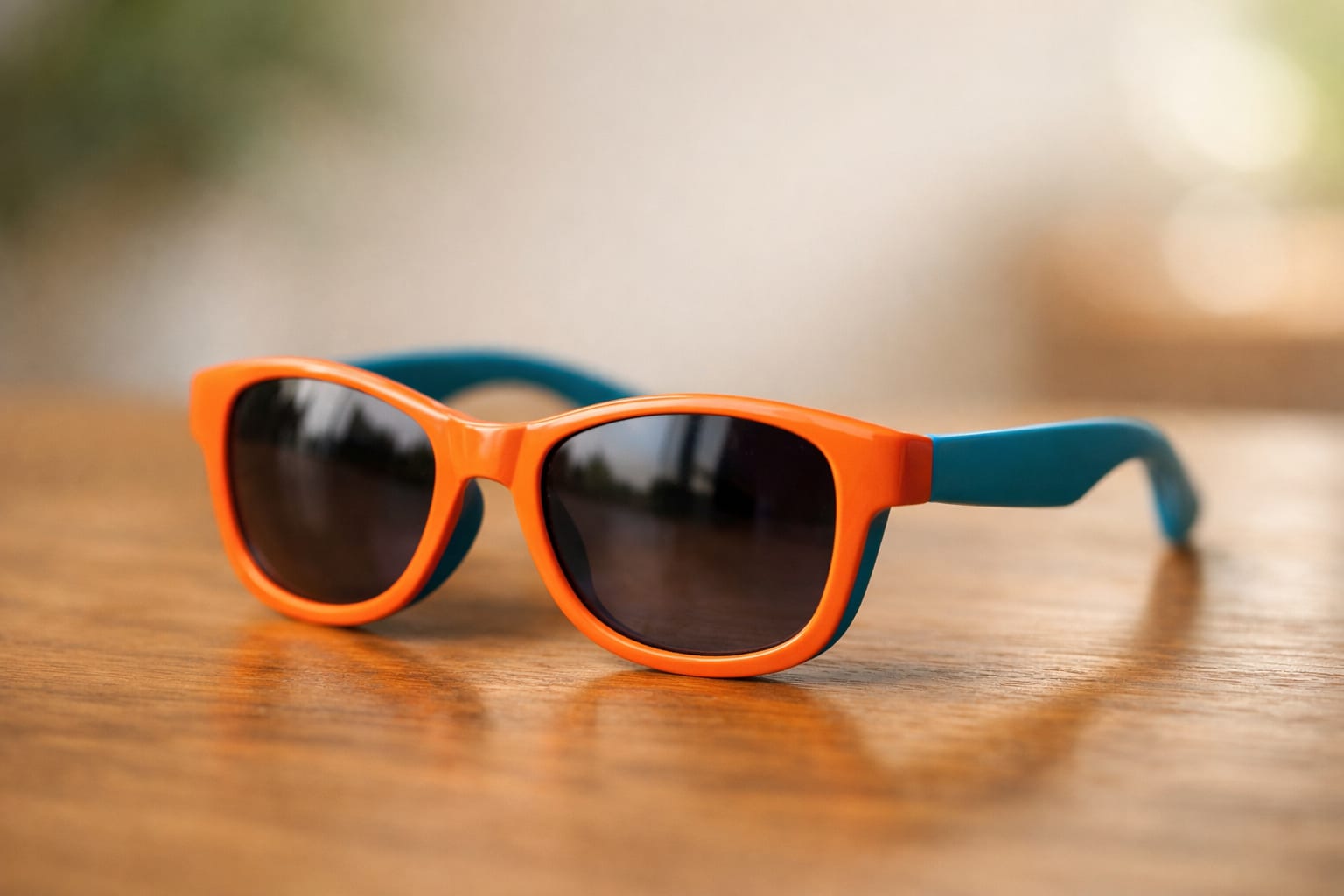
Quality sunglasses for kids are widely available — you just need to know the right things to check. Look for lenses that offer 100% UVA and UVB protection and block UV absorption up to 400 nanometers (nm). Make sure the frames cover as much of the eye and surrounding area as possible. Wide or wrap-around styles give the best protection. Frames with a band help keep sunglasses in place so active kids do not lose them. Polycarbonate or Trivex lenses are a smart choice for children because they are more durable and impact-resistant than standard lenses — important for sports and outdoor play.

Photochromic Lenses: A Great Option for Kids Who Already Wear Glasses

Children who already wear prescription eyeglasses have a convenient option: photochromic lenses. These lenses darken automatically in response to sunlight and return to clear indoors — essentially giving your child two pairs of glasses in one. Photochromic lenses mean there is no need to switch between regular glasses and sunglasses, so there is less chance of losing a pair. Ask a Golden Triangle Eye Center eye doctor about whether photochromic lenses are right for your child.

Tips for Getting Kids to Actually Wear Their Sunglasses

Even the best sunglasses will not help if your child refuses to wear them. A few simple steps can make a big difference. First, let your child choose their own frames — kids are far more willing to wear sunglasses they picked out themselves. Second, invest in a strong storage case and talk with your child about keeping the glasses safe. Third, ask Golden Triangle Eye Center about the replacement or repair policy for lost or broken sunglasses, so you have a plan in place before it happens. Making sunglasses a normal, everyday part of going outside helps kids build a lasting habit.
Questions, answered

Frequently Asked Questions About Kids' Sunglasses

Do kids really need to wear sunglasses?

Yes — children's eyes need UV protection every time they go outdoors. Studies show that by age 18, a child will have absorbed roughly half of their lifetime dose of UV radiation. Starting sun protection early helps prevent serious eye diseases like cataracts and macular degeneration later in life. The American Optometric Association recommends UV-protective sunglasses for children of all ages.

What kind of sunglasses should I buy for my child?

Choose sunglasses that block 100% of UVA and UVB rays and filter UV up to 400 nanometers (nm). Frames should be large enough to cover the eye and the skin around it — wrap-around or wide-lens styles work best. Polycarbonate or Trivex lenses are a great choice for kids because they resist impact and are more durable than standard plastic lenses. Many children's frames also come with an elastic band to keep sunglasses from slipping or getting lost.

At what age should kids start wearing sunglasses?

Children can and should wear sunglasses as soon as they begin spending time outdoors, even as infants. The earlier a child starts wearing UV-protective sunglasses, the less cumulative UV damage their eyes will sustain over a lifetime. Look for infant-sized frames with a soft elastic band for very young children.

What is photokeratitis and can it happen to children?

Photokeratitis is a sunburn of the outer surface of the eye caused by too much UV exposure — it can absolutely affect children. It causes pain, redness, and temporary vision loss that can last up to 48 hours. It is sometimes called "snow blindness" because it often happens when UV reflects off snow or water. Wearing sunglasses outdoors prevents photokeratitis.

Can my child wear photochromic lenses instead of separate sunglasses?

Yes — photochromic lenses are an excellent option for children who already wear prescription eyeglasses. These lenses darken automatically in sunlight and return to clear indoors, so your child always has the right lens for their environment without switching glasses. Ask Dr. Ford at Golden Triangle Eye Center whether photochromic lenses are a good fit for your child's prescription.

How do I get my child to actually wear their sunglasses?

The most effective strategy is to let your child pick their own frames — kids wear sunglasses they chose themselves far more often. Pair that with a sturdy case and a clear routine of putting sunglasses on whenever heading outdoors. Talk with your child about why sun protection matters; even young children respond well to simple, honest explanations.

What long-term eye problems can UV exposure cause in children?

Long-term UV exposure in childhood is linked to cataracts (clouding of the eye's lens), age-related macular degeneration (damage to the part of the eye that controls sharp vision), and cancer of the eye, eyelid, or surrounding skin. Because these diseases build up from years of accumulated exposure, protecting children's eyes early is the most effective prevention strategy. Call Golden Triangle Eye Center at 662‑327‑7271 to schedule your child's eye exam and discuss UV protection.

What should I do if my child's sunglasses are lost or broken?

Ask about the replacement or repair policy when you purchase your child's sunglasses. Golden Triangle Eye Center can help you understand your options and find a durable pair that fits your budget. Investing in a strong storage case from the start is the simplest way to reduce the chance of damage or loss.

Schedule an Eye Exam

Contact the office to book your next visit.