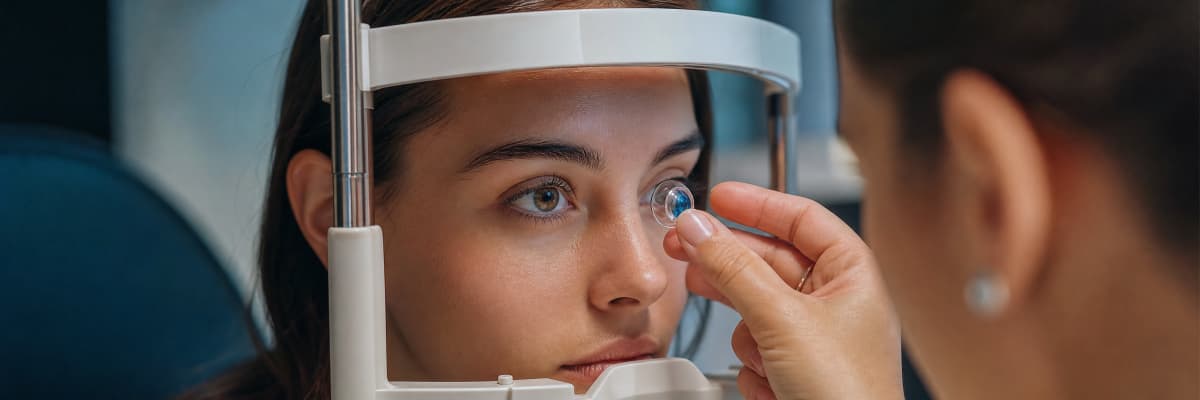

Specialty Contact Lens Fittings

Been Told You Can't Wear Contact Lenses?

You may still have options. Golden Triangle Eye Center in Columbus, MS fits patients with dry eyes, astigmatism, keratoconus, presbyopia, and other conditions that make standard contacts a poor fit. A specialized exam can find the right lens for your eyes.

Happy hard-to-fit contact lens patient wearing scleral lenses

Contact Lens Options for Hard-to-Fit Patients

Many conditions that seem to rule out contacts can actually be managed with the right lens type and a careful fitting process.

  1. Dry Eyes and Contact Lenses

    Dry Eye Syndrome makes eyes feel dry, gritty, burning, and red — and contacts can make symptoms worse. Once your dry eyes are treated, soft lenses formulated for moisture retention or rigid gas permeable (RGP) lenses — hard lenses that hold moisture under the lens — are both solid choices. Your eye doctor may also adjust your wearing schedule to keep eyes comfortable.

  2. Toric Lenses for Astigmatism

    Astigmatism (ah-stig-muh-tiz-um) happens when the front surface of the eye, the cornea, has two curves instead of one. This causes blurred or double vision and makes standard round lenses shift off-center. Toric contact lenses are custom-made to match each patient's corneal shape and are designed to stay in place. When lens rotation can't be controlled, RGP lenses are another option.

  3. Giant Papillary Conjunctivitis (GPC) and Contact Lenses

    GPC is a type of eye inflammation (conjunctivitis) where the inside of the eyelid becomes swollen, often triggered by protein buildup on soft lenses. Daily disposable lenses or RGP lenses — which resist protein deposits — are common solutions. Medicated eye drops and a temporary break from lenses may also be needed while symptoms settle.

  4. Rigid Gas Permeable (RGP) Lenses

    RGP lenses — also called GP lenses — are made of a firm, oxygen-permeable material. They let eyes breathe, reduce the risk of infection from protein buildup, and hold moisture under the lens. RGPs are effective across many hard-to-fit conditions and are often more durable and easier to keep clean than soft lenses.

  5. RGP Lenses for Keratoconus

    Keratoconus (kehr-uh-toh-KOH-nus) is a condition where the cornea thins and bulges forward into a cone shape. Soft lenses and eyeglasses often can't fully correct the vision changes this causes. RGP lenses vault over the irregular cornea shape, providing clearer vision for mild, moderate, and some severe cases. In some situations, RGPs may also help slow the progression of the cone shape.

  6. Post-LASIK and Refractive Surgery Complications

    LASIK surgery has a high success rate, but some patients experience lasting side effects like glare or halos around lights at night. RGP lenses create a smooth optical surface over the altered cornea and can help reduce these symptoms and restore clearer vision.

  • Dry Eye Syndrome
  • Astigmatism
  • Giant Papillary Conjunctivitis (GPC)
  • Keratoconus

Hard-to-Fit Contact Lenses: Common Questions

Who is considered a hard-to-fit contact lens patient?

You may be a hard-to-fit contact lens patient if you have dry eye syndrome, astigmatism, keratoconus, giant papillary conjunctivitis (GPC), presbyopia, corneal scarring, pellucid marginal degeneration, or a history of LASIK or other refractive surgery. These conditions affect the shape or surface of the eye in ways that make standard contact lenses uncomfortable or hard to keep in place. Golden Triangle Eye Center offers specialized fittings to find the right lens type for each of these conditions.

Can I wear contacts if I have dry eyes?

Yes, many people with dry eyes can wear contact lenses after their condition is treated and the right lens type is chosen. Soft lenses made with moisture-retaining materials and rigid gas permeable (RGP) lenses — which hold a thin layer of moisture under the lens — are both options your eye doctor may recommend. A modified wearing schedule, such as fewer hours per day or more frequent lens replacement, can also help reduce dryness symptoms.

What kind of contacts work for astigmatism?

Toric contact lenses are the most common option for astigmatism — they are custom-shaped to match the unique curvature of each patient's cornea and designed to stay in place during blinking. When toric lenses rotate too much, rigid gas permeable (RGP) lenses are often tried instead because their firm shape holds its position on the eye. Both types require a specialized fitting process that takes more time than a standard contact lens exam.

What are rigid gas permeable (RGP) lenses and who are they for?

Rigid gas permeable (RGP) lenses — sometimes called GP lenses — are firm, oxygen-permeable contact lenses that work well for many hard-to-fit conditions including keratoconus, dry eyes, GPC, post-LASIK complications, and astigmatism. Unlike soft lenses, RGPs do not contain water, which means they resist protein buildup and reduce the risk of eye infections. They also hold moisture under the lens to keep the eye surface hydrated throughout the day.

Can I wear contacts if I have keratoconus?

Many patients with keratoconus (a condition where the cornea thins and bulges into a cone shape) can wear RGP lenses for vision correction. RGP lenses vault over the irregular corneal surface and provide clearer vision than eyeglasses or soft lenses often can in these cases. At Golden Triangle Eye Center, we fit patients with mild, moderate, and some severe cases of keratoconus. Call us at 662‑729‑8246 to schedule a consultation.

What contact lens options are available for presbyopia after age 40?

Patients with presbyopia (reduced ability to focus on close objects, common after age 40) can choose bifocal or multifocal contact lenses, or a fitting approach called monovision. Monovision uses one lens corrected for distance vision and the other for near vision. Multifocal lenses fit both eyes to handle distance and near tasks at the same time. Most patients need about one week to adjust to either approach.

How long does a hard-to-fit contact lens exam take compared to a regular exam?

A hard-to-fit contact lens exam takes longer than a standard contact lens fitting because it involves additional measurements, trial lens testing, and follow-up adjustments specific to your condition. The exact time depends on which condition is being addressed and how quickly a comfortable, stable fit is achieved. Custom lenses such as toric lenses may also take longer to arrive from the lab than standard lenses.

What should I do if contact lenses have always felt uncomfortable?

If contacts have always felt uncomfortable, schedule a specialty contact lens exam to find out whether an underlying condition is affecting your fit. Many patients who were told they simply could not wear contacts are able to do so once the right lens type is matched to their specific eye shape or condition. Contact Golden Triangle Eye Center in Columbus to discuss your history and explore your options.

Medical Disclaimer

The information on this page is for general educational purposes only and is not a substitute for professional medical advice, diagnosis, or treatment. Always seek the advice of your eye care provider with any questions about a medical condition. If you think you may have a medical emergency, call 911.
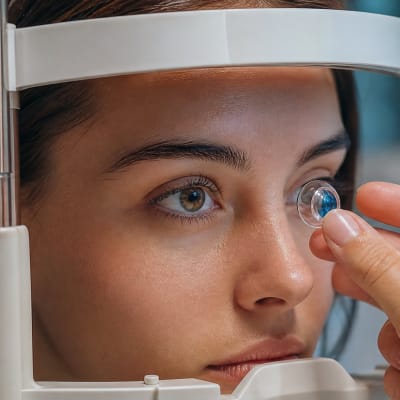
Find Out If Hard-to-Fit Lenses Are Right for You

A specialty fitting exam can open the door to contact lens wear — even if standard lenses have not worked for you before. Call Golden Triangle Eye Center at 662‑729‑8246 or request an appointment online.

Our Locations

Golden Triangle Eye Center serves patients at multiple locations.

Columbus

Office hours

Monday8:00 AM - 5:00 PM
Tuesday8:00 AM - 5:00 PM
Wednesday8:00 AM - 5:00 PM
Thursday8:00 AM - 5:00 PM
Friday8:00 AM - 12:00 PM
SaturdayClosed
SundayClosed

Aliceville

Office hours

MondayClosed
TuesdayClosed
WednesdayClosed
ThursdayClosed
Friday8:30 AM - 4:30 PM
SaturdayClosed
SundayClosed
Patient Reviews

What Our Patients Say

We take pride in delivering exceptional eye care and building lasting relationships with our patients.

★★★★★4.9(664+ Reviews)
Write a Review (opens in new tab)

Opens Google — no account required to read. Google account needed to post a review.

Request an Appointment

Fill out our secure patient form and our team will get back to you promptly.

HIPAA-Secure Patient Form
Protected health information is encrypted and transmitted securely.

By submitting this form, you consent to our Notice of Privacy Practices and authorize us to contact you regarding your inquiry. Your information is protected in accordance with HIPAA regulations.

Powered by Jotform HIPAA · BAA on file · 256-bit encryption

Full Name